Skip to the content
Skip to content
Skip to the content
Skip to content Home / Blog
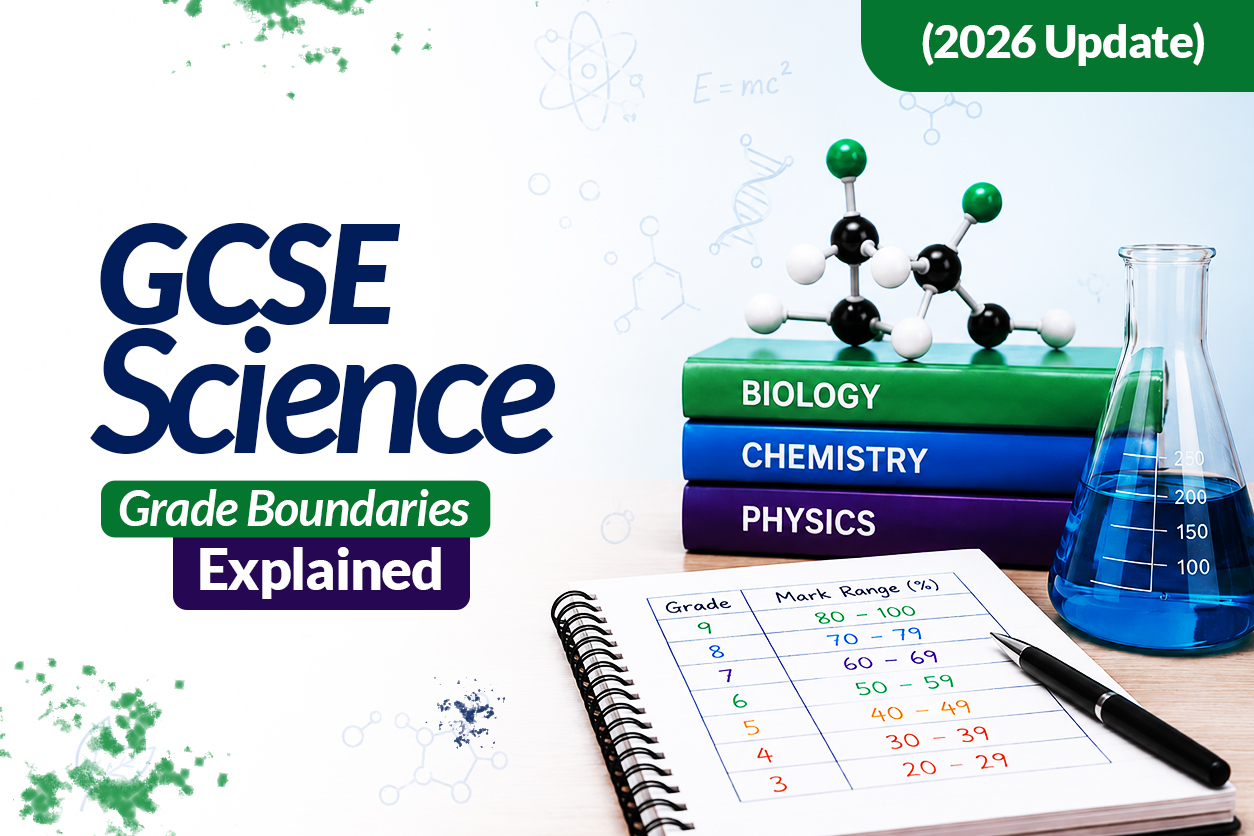
Understanding GCSE grade boundaries can feel confusing, especially when results day approaches and everyone starts comparing marks, percentages and predicted grades. The good news is that GCSE science grade boundaries are designed to make results fair across different exam papers and exam boards. In this 2026 update, we’ll explain GCSE science grades explained in plain English, break down how the GCSE science grading system UK works, and share practical revision advice to help students aim higher.
GCSE science grade boundaries are not fixed percentages. Exam boards set them after exams are marked, based on paper difficulty and statistical evidence. A grade 4 is the standard pass, grade 5 is a strong pass, and grades 7–9 are the highest bands. Your raw marks are converted into a grade using the boundary table for your exam board and tier.
A common mistake is thinking “70% always equals a grade 7”. It doesn’t. One year, a grade 7 in Biology might be around a certain raw mark; another year it could shift because the paper was harder or easier. Always check the official boundary document for your exam board (AQA, Edexcel/Pearson, OCR, etc.) and the correct tier (Foundation or Higher).
In UK, GCSEs are graded from 9 to 1, with 9 being the highest grade. For science, students usually take either Separate Sciences (Biology, Chemistry and Physics as individual GCSEs) or Combined Science (worth two GCSE grades, such as 6-6 or 5-4).
| Grade | Meaning (simple guide) |
|---|---|
|
9, 8, 7
|
High achievement
|
|
6, 5
|
Strong to good pass
|
|
4
|
Standard pass
|
|
3, 2, 1
|
Below standard pass level
|
Exam boards look at how difficult the papers were, how students performed overall, and evidence from senior examiners. If a paper was harder than usual, the raw mark needed for a grade 4 or 7 may be lower. This is why GCSE science grades explained should always include the idea that grades come from boundaries, not fixed percentages.
For 2026, the key message is the same as recent years: boundaries are released after marking is complete. Teachers and tutors may use previous years’ boundaries to estimate performance, but these are only guides.
Students sometimes say, “I only need 58 marks for a 5.” That number may not apply in 2026, or even to your exact paper. A better strategy is to aim for consistent accuracy across topics and leave a safety margin above your target grade.
Grade boundaries are most useful after you’ve marked a past paper. They help you judge whether you’re roughly working at a grade 4, 5, 6, and so on. They should not replace a proper GCSE science revision guide.
This is one of the best GCSE science study tips: use evidence from your own mistakes, not guesswork.
Many students spend hours revising but still do not see improvements because they use ineffective revision methods.
Instead of simply rereading textbooks, try active learning strategies such as:
If your goal is GCSE science exam success, focus on methods that repeatedly improve recall and exam technique.
Close the book and test yourself: flashcards, blurting, quick quizzes, and explaining a process aloud. This is far stronger than rereading notes.
Revisit topics over several weeks instead of cramming once. A short daily review often beats a single long session.
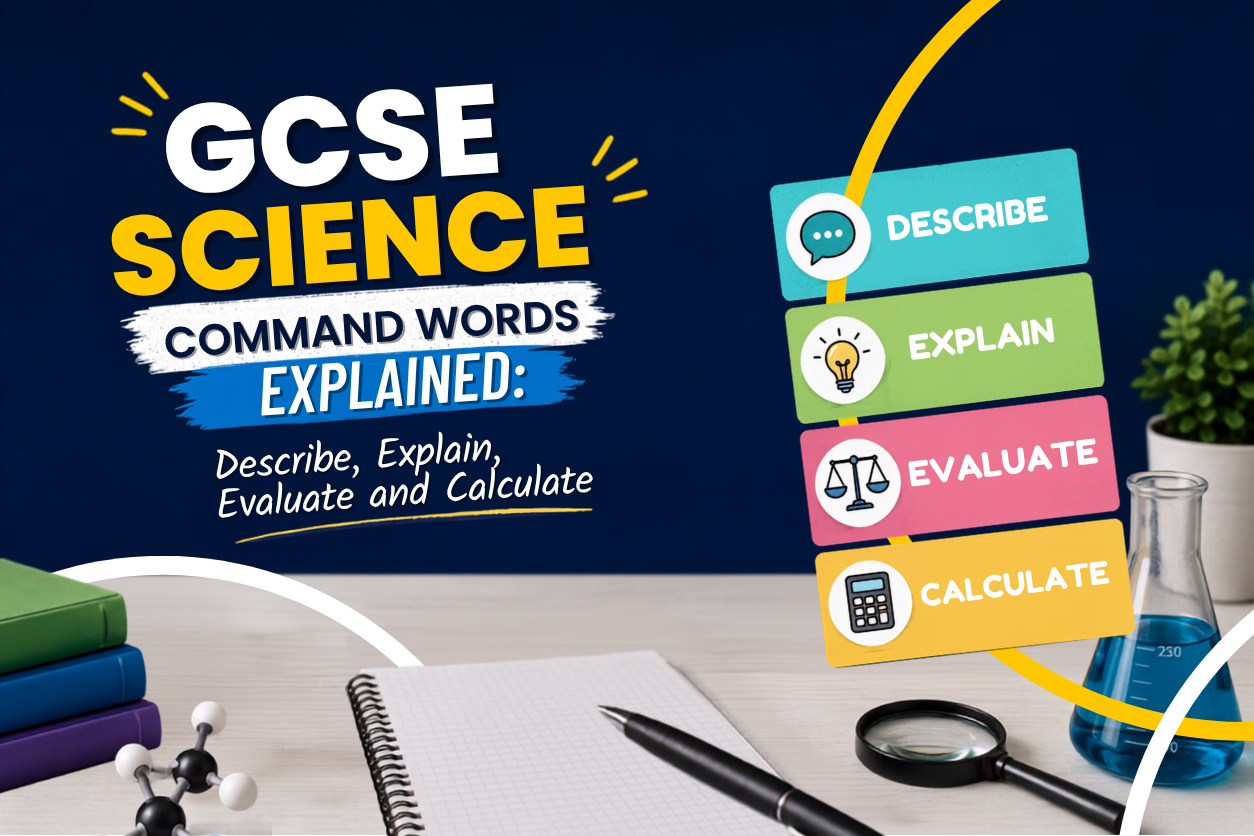
Practise command words (“describe”, “explain”, “evaluate”) and learn how mark schemes reward precise scientific language.
Don’t spend equal time on every topic. Prioritise the areas where you lose the most marks, such as calculations, required practicals, or extended responses.
| DAY | TASK |
|---|---|
|
Mon
|
Biology active recall + 20 mins flashcards
|
|
Tue
|
Chemistry calculations + one past-paper section
|
|
Wed
|
Physics required practicals + mark scheme review
|
|
Thu
|
Mixed quiz + revisit weakest topic
|
|
Fri
|
Timed mini-paper + boundary comparison
|
|
Weekend
|
Full past paper or tutor-led revision session
|
Some students improve quickly with independent study; others benefit from structure and feedback. GCSE science tutoring UK can help if you regularly miss the same types of questions, struggle to stay consistent, or need confidence before mocks and finals.
| Need | Best fit |
|---|---|
|
Personal feedback on weak topics
|
Online GCSE science tutor UK or 1:1 tutoring
|
|
Structured revision before exams
|
GCSE science revision courses UK
|
|
Regular accountability and planning
|
Weekly tutoring or study group
|
|
Quick help with one difficult topic
|
Short targeted session or school support
|
For families looking for GCSE science help England or broader GCSE science support for students in the UK, the most effective support is usually the option that includes marked practice and feedback, not just more notes.
Use grade boundaries as a guide after marking papers, not as a fixed percentage target. For 2026, the safest path is strong topic knowledge, regular past-paper practice, and feedback on mistakes. That combination is far more reliable for GCSE science exam success than trying to predict an exact boundary months in advance.
Yes — grade 4 is the standard pass in UK.
Grade 5 is considered a strong pass and is a solid result for many post-16 pathways.
Yes. They are set after exams are marked and can move up or down depending on paper difficulty and national performance.
Use them as rough benchmarks for practice papers, but don’t assume the same numbers will apply in 2026.

GCSE Sciences can assist you in advancing your academic knowledge and increasing your understanding of core concepts through our practical approach based courses.
Subcribe to notifications to get news
2026 © Copyrights Gscesciences All Right Recived
WhatsApp us
 Optimized by Seraphinite Accelerator